 scale(0.3267)'%3E%3Cpath d='M 272.75 221.49 A 88 88 0 0 1 426.92 152.85 A 20 20 0 0 1 396.50 178.83 A 48 48 0 0 0 312.41 216.27 A 20 20 0 0 1 272.75 221.49 Z' fill='%23F26A4B'%3E%3C/path%3E%3Cpath d='M 327.00 210.00 a 33 33 0 1 0 66 0 a 33 33 0 1 0 -66 0 Z' fill='%23F26A4B'%3E%3C/path%3E%3Cpath d='M 413.90 205.43 A 88 88 0 0 1 563.68 283.16 A 20 20 0 0 1 524.40 275.58 A 48 48 0 0 0 442.70 233.18 A 20 20 0 0 1 413.90 205.43 Z' fill='%23F7A93E'%3E%3C/path%3E%3Cpath d='M 444.27 266.48 a 33 33 0 1 0 66 0 a 33 33 0 1 0 -66 0 Z' fill='%23F7A93E'%3E%3C/path%3E%3Cpath d='M 514.46 305.76 A 88 88 0 0 1 547.07 471.33 A 20 20 0 0 1 528.51 435.90 A 48 48 0 0 0 510.72 345.59 A 20 20 0 0 1 514.46 305.76 Z' fill='%23F6CB2A'%3E%3C/path%3E%3Cpath d='M 473.24 393.38 a 33 33 0 1 0 66 0 a 33 33 0 1 0 -66 0 Z' fill='%23F6CB2A'%3E%3C/path%3E%3Cpath d='M 498.71 446.94 A 88 88 0 0 1 389.59 575.67 A 20 20 0 0 1 405.72 539.07 A 48 48 0 0 0 465.24 468.85 A 20 20 0 0 1 498.71 446.94 Z' fill='%233FAE49'%3E%3C/path%3E%3Cpath d='M 392.08 495.15 a 33 33 0 1 0 66 0 a 33 33 0 1 0 -66 0 Z' fill='%233FAE49'%3E%3C/path%3E%3Cpath d='M 378.51 522.65 A 88 88 0 0 1 209.83 517.60 A 20 20 0 0 1 248.51 507.40 A 48 48 0 0 0 340.51 510.15 A 20 20 0 0 1 378.51 522.65 Z' fill='%2322B8A8'%3E%3C/path%3E%3Cpath d='M 261.92 495.15 a 33 33 0 1 0 66 0 a 33 33 0 1 0 -66 0 Z' fill='%2322B8A8'%3E%3C/path%3E%3Cpath d='M 244.37 475.88 A 88 88 0 0 1 143.15 340.86 A 20 20 0 0 1 175.25 364.73 A 48 48 0 0 0 230.46 438.38 A 20 20 0 0 1 244.37 475.88 Z' fill='%234A90D9'%3E%3C/path%3E%3Cpath d='M 180.76 393.38 a 33 33 0 1 0 66 0 a 33 33 0 1 0 -66 0 Z' fill='%234A90D9'%3E%3C/path%3E%3Cpath d='M 197.31 341.85 A 88 88 0 0 1 239.76 178.53 A 20 20 0 0 1 241.11 218.50 A 48 48 0 0 0 217.95 307.59 A 20 20 0 0 1 197.31 341.85 Z' fill='%23AB6DB4'%3E%3C/path%3E%3Cpath d='M 209.73 266.48 a 33 33 0 1 0 66 0 a 33 33 0 1 0 -66 0 Z' fill='%23AB6DB4'%3E%3C/path%3E%3C/g%3E%3Cg transform='translate(-16.776 0)'%3E%3Cpath d='M941.28 332.40L941.28 332.40Q931.68 332.40 922.80 329.88Q913.92 327.36 906.48 322.68Q899.04 318 893.52 311.28L893.52 311.28L910.32 294.48Q916.32 301.44 924.12 304.92Q931.92 308.40 941.76 308.40L941.76 308.40Q950.64 308.40 955.20 305.76Q959.76 303.12 959.76 298.08L959.76 298.08Q959.76 292.80 955.44 289.92Q951.12 287.04 944.28 285Q937.44 282.96 929.88 280.80Q922.32 278.64 915.48 274.92Q908.64 271.20 904.32 264.72Q900 258.24 900 247.92L900 247.92Q900 236.88 905.16 228.96Q910.32 221.04 919.80 216.72Q929.28 212.40 942.48 212.40L942.48 212.40Q956.40 212.40 967.08 217.32Q977.76 222.24 984.96 232.08L984.96 232.08L968.16 248.88Q963.12 242.64 956.64 239.52Q950.16 236.40 941.76 236.40L941.76 236.40Q933.84 236.40 929.52 238.80Q925.20 241.20 925.20 245.76L925.20 245.76Q925.20 250.56 929.52 253.20Q933.84 255.84 940.68 257.76Q947.52 259.68 955.08 261.96Q962.64 264.24 969.48 268.20Q976.32 272.16 980.64 278.76Q984.96 285.36 984.96 295.92L984.96 295.92Q984.96 312.72 973.20 322.56Q961.44 332.40 941.28 332.40Z' fill='%23123a41'%3E%3C/path%3E%3C/g%3E%3C/svg%3E)
The EU AI Act Gave HR 16 More Months. Here Is What German Employers Still Owe Now
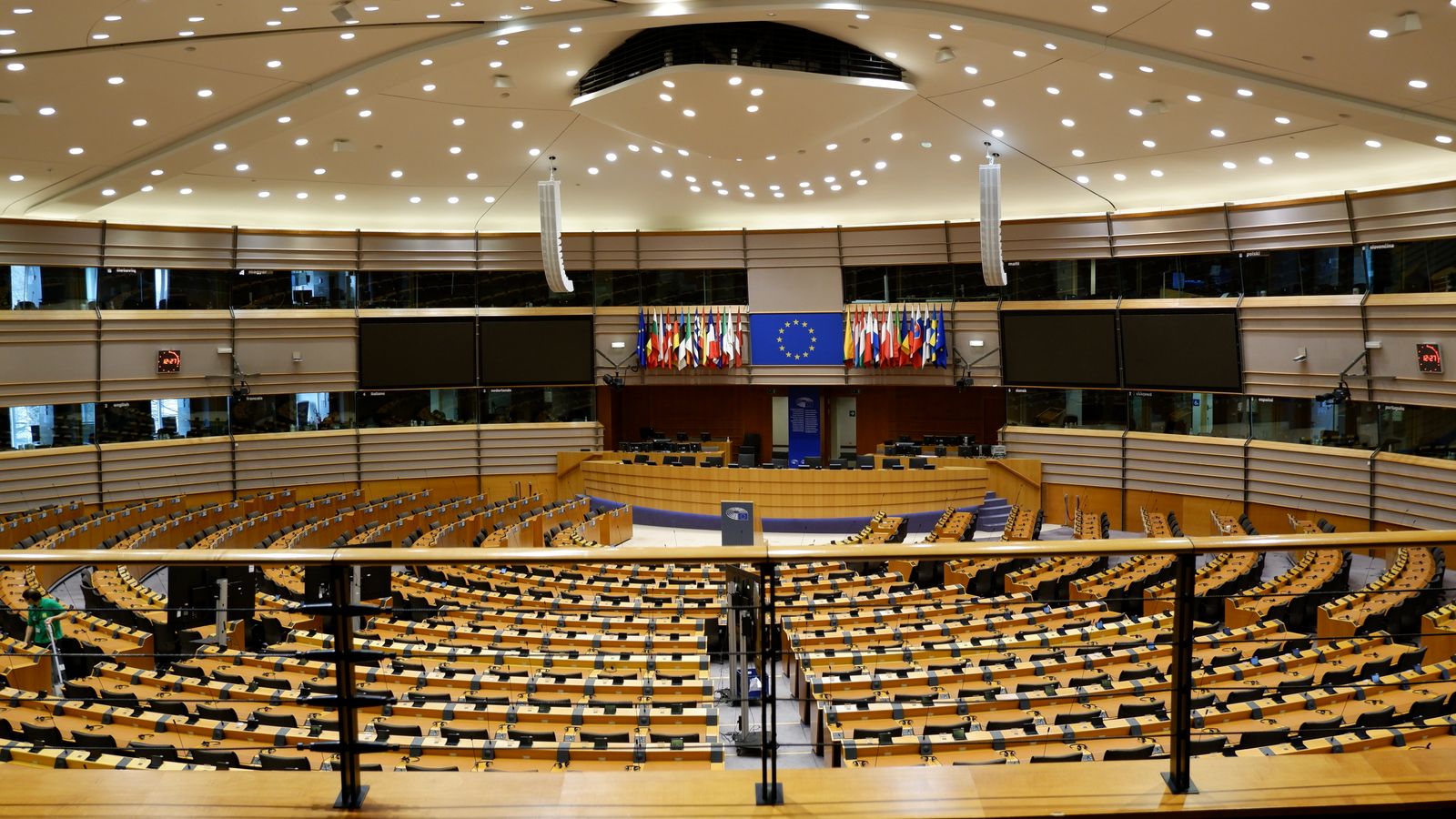
The AI Omnibus pushed high-risk rules for hiring and performance AI to December 2027, but the workplace bans, AI literacy and works council rights did not move.
Since 27 July 2026, the date that mattered most to HR teams in Europe is no longer 2 August 2026. According to White & Case, the EU's AI Omnibus was published in the Official Journal on 24 July as Regulation (EU) 2026/1744, entered into force three days later, and moves the high-risk obligations for stand-alone AI systems listed in Annex III to 2 December 2027. That list covers almost every AI tool an HR department buys: CV screening, candidate ranking, performance evaluation, task allocation and worker monitoring. For German employers that had planned a frantic summer of compliance work, the pressure is off. The work is not.
What actually changed
The deal came together quickly by EU standards. Sidley reports that Parliament and Council reached a provisional agreement on 7 May 2026 and that Parliament voted it through on 16 June; White & Case notes the text was signed on 8 July. ActuIA, which followed the file for HR readers, puts the postponement at 16 months and spells out which employment uses stay in scope: recruitment and selection under Annex III point 4(a), and decisions on promotion, termination, task allocation, monitoring and performance evaluation under point 4(b).
Three further details matter for HR teams:
- AI embedded in regulated products (Annex I) now follows on 2 August 2028, according to White & Case.
- Most transparency duties under Article 50 applied from 2 August 2026 as planned. Generative AI systems already on the market before that date have until 2 December 2026 for watermarking, per the same analysis.
- The AI literacy rule in Article 4 was rewritten. White & Case notes that providers and deployers no longer have to ensure a sufficient level of AI literacy among their staff; they now have to take measures to support its development.
The literacy change is the one most likely to be misread. It softens the wording; it does not delete the duty. Trade unions noticed immediately.
"The few workplace references in the AI Act now risk being weakened by the Digital Omnibus."
— ETUC, as reported by ActuIA
What German HR still has to do in 2026
Postponing one deadline is not postponing the whole Act. Two obligations have applied since 2 February 2025: one was softened, the other did not move at all, and a third set of duties comes from German law rather than Brussels.
First, the prohibited practices. Grant Thornton's German employment lawyers list emotion recognition in the workplace among the banned uses, alongside social scoring and subliminal manipulation of employees. If any tool in your stack claims to read mood, stress or engagement from faces, voices or typing patterns, that is not a 2027 problem. It is a question for your vendor this week.
Second, AI literacy. Even in its softer form, Article 4 still expects employers to take concrete measures. In practice that means a documented training programme for the people who configure, use or act on AI outputs in recruiting and people management, scaled to the risk of what they touch.
Third, co-determination, which does not depend on Brussels at all. Grant Thornton points out that the works council's right under § 87(1) no. 6 BetrVG applies to any technical system objectively capable of monitoring behaviour or performance, which captures most HR AI. Under § 80(3) BetrVG, the works council has an explicit right to information and consultation when AI use is planned, and § 95(2a) extends its say over selection guidelines to AI-supported procedures. None of these rules waits for December 2027.
Why it matters for HR and HR tech buyers
The extra 16 months are most valuable to employers who treat them as a build phase rather than a holiday. Deployer duties for high-risk systems, which Grant Thornton summarises as ensuring human oversight and informing the people affected, take time to embed in processes and in works agreements. A Betriebsvereinbarung on AI negotiated in autumn 2027 under deadline pressure will be a worse document than one negotiated calmly in 2026.
The delay also changes the vendor conversation. Until now, many HR tech providers could answer compliance questions with a roadmap slide pointing at August 2026. That answer no longer works, and you now have time to ask for evidence rather than promises: technical documentation, bias testing methodology, logging capabilities and a clear description of where a human can override the system. Ask now, while switching providers is still a realistic option.
The counterpoint: is waiting rational?
Some employers will argue the opposite. The rules changed once already, the wider Digital Omnibus package is still under discussion, and investing early in compliance with a moving target can waste money. That is a fair point for the detailed conformity work that sits with providers. It is a weak point for deployers. ActuIA reminds readers that GDPR Article 22 still governs fully automated decisions in recruitment, dismissal and individual evaluation, and that the CJEU's SCHUFA judgment requires real, not nominal, human discretion. Meaningful human review, a documented purpose, a trained team and an involved works council are needed under German and EU law whatever happens to the AI Act timetable.
The Peoplos take
Use the reprieve to build an inventory. List every system in HR that ranks, scores, filters or monitors people, mark which ones fall under Annex III point 4, confirm that none of them touches emotion recognition, and attach to each the training record and the works council agreement that covers it. If you can produce that list on one page, you are ahead of most German employers, and December 2027 becomes a checkpoint rather than a cliff. At Peoplos we build AI features with explainable outputs and human sign-off by default, because that is where the regulation is heading anyway.
The deadline moved. The direction of travel did not.