 scale(0.3267)'%3E%3Cpath d='M 272.75 221.49 A 88 88 0 0 1 426.92 152.85 A 20 20 0 0 1 396.50 178.83 A 48 48 0 0 0 312.41 216.27 A 20 20 0 0 1 272.75 221.49 Z' fill='%23F26A4B'%3E%3C/path%3E%3Cpath d='M 327.00 210.00 a 33 33 0 1 0 66 0 a 33 33 0 1 0 -66 0 Z' fill='%23F26A4B'%3E%3C/path%3E%3Cpath d='M 413.90 205.43 A 88 88 0 0 1 563.68 283.16 A 20 20 0 0 1 524.40 275.58 A 48 48 0 0 0 442.70 233.18 A 20 20 0 0 1 413.90 205.43 Z' fill='%23F7A93E'%3E%3C/path%3E%3Cpath d='M 444.27 266.48 a 33 33 0 1 0 66 0 a 33 33 0 1 0 -66 0 Z' fill='%23F7A93E'%3E%3C/path%3E%3Cpath d='M 514.46 305.76 A 88 88 0 0 1 547.07 471.33 A 20 20 0 0 1 528.51 435.90 A 48 48 0 0 0 510.72 345.59 A 20 20 0 0 1 514.46 305.76 Z' fill='%23F6CB2A'%3E%3C/path%3E%3Cpath d='M 473.24 393.38 a 33 33 0 1 0 66 0 a 33 33 0 1 0 -66 0 Z' fill='%23F6CB2A'%3E%3C/path%3E%3Cpath d='M 498.71 446.94 A 88 88 0 0 1 389.59 575.67 A 20 20 0 0 1 405.72 539.07 A 48 48 0 0 0 465.24 468.85 A 20 20 0 0 1 498.71 446.94 Z' fill='%233FAE49'%3E%3C/path%3E%3Cpath d='M 392.08 495.15 a 33 33 0 1 0 66 0 a 33 33 0 1 0 -66 0 Z' fill='%233FAE49'%3E%3C/path%3E%3Cpath d='M 378.51 522.65 A 88 88 0 0 1 209.83 517.60 A 20 20 0 0 1 248.51 507.40 A 48 48 0 0 0 340.51 510.15 A 20 20 0 0 1 378.51 522.65 Z' fill='%2322B8A8'%3E%3C/path%3E%3Cpath d='M 261.92 495.15 a 33 33 0 1 0 66 0 a 33 33 0 1 0 -66 0 Z' fill='%2322B8A8'%3E%3C/path%3E%3Cpath d='M 244.37 475.88 A 88 88 0 0 1 143.15 340.86 A 20 20 0 0 1 175.25 364.73 A 48 48 0 0 0 230.46 438.38 A 20 20 0 0 1 244.37 475.88 Z' fill='%234A90D9'%3E%3C/path%3E%3Cpath d='M 180.76 393.38 a 33 33 0 1 0 66 0 a 33 33 0 1 0 -66 0 Z' fill='%234A90D9'%3E%3C/path%3E%3Cpath d='M 197.31 341.85 A 88 88 0 0 1 239.76 178.53 A 20 20 0 0 1 241.11 218.50 A 48 48 0 0 0 217.95 307.59 A 20 20 0 0 1 197.31 341.85 Z' fill='%23AB6DB4'%3E%3C/path%3E%3Cpath d='M 209.73 266.48 a 33 33 0 1 0 66 0 a 33 33 0 1 0 -66 0 Z' fill='%23AB6DB4'%3E%3C/path%3E%3C/g%3E%3Cg transform='translate(-16.776 0)'%3E%3Cpath d='M941.28 332.40L941.28 332.40Q931.68 332.40 922.80 329.88Q913.92 327.36 906.48 322.68Q899.04 318 893.52 311.28L893.52 311.28L910.32 294.48Q916.32 301.44 924.12 304.92Q931.92 308.40 941.76 308.40L941.76 308.40Q950.64 308.40 955.20 305.76Q959.76 303.12 959.76 298.08L959.76 298.08Q959.76 292.80 955.44 289.92Q951.12 287.04 944.28 285Q937.44 282.96 929.88 280.80Q922.32 278.64 915.48 274.92Q908.64 271.20 904.32 264.72Q900 258.24 900 247.92L900 247.92Q900 236.88 905.16 228.96Q910.32 221.04 919.80 216.72Q929.28 212.40 942.48 212.40L942.48 212.40Q956.40 212.40 967.08 217.32Q977.76 222.24 984.96 232.08L984.96 232.08L968.16 248.88Q963.12 242.64 956.64 239.52Q950.16 236.40 941.76 236.40L941.76 236.40Q933.84 236.40 929.52 238.80Q925.20 241.20 925.20 245.76L925.20 245.76Q925.20 250.56 929.52 253.20Q933.84 255.84 940.68 257.76Q947.52 259.68 955.08 261.96Q962.64 264.24 969.48 268.20Q976.32 272.16 980.64 278.76Q984.96 285.36 984.96 295.92L984.96 295.92Q984.96 312.72 973.20 322.56Q961.44 332.40 941.28 332.40Z' fill='%23123a41'%3E%3C/path%3E%3C/g%3E%3C/svg%3E)
A Federal AI Law Is Finally on the Table — Here's What HR Should Track
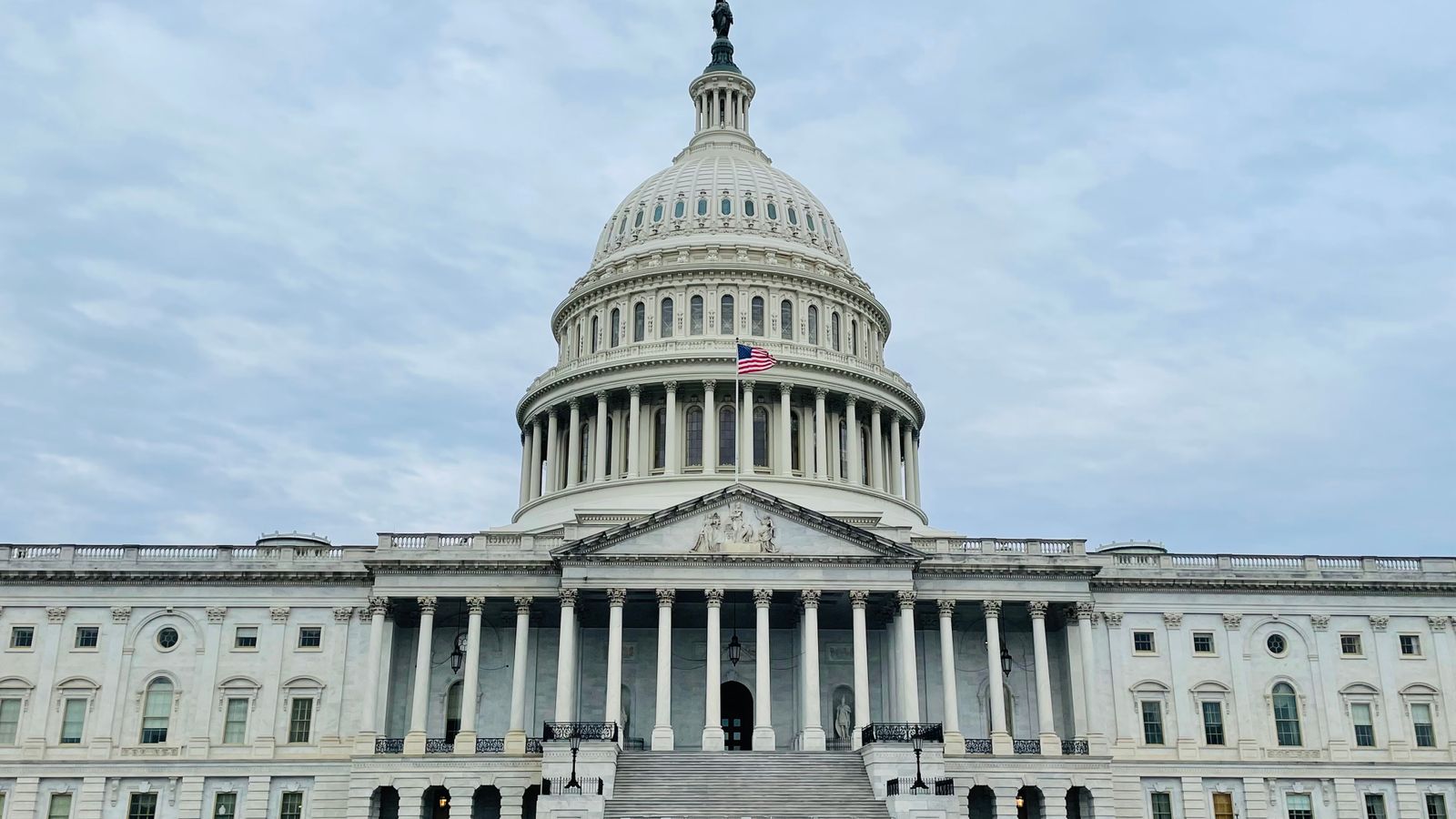
A bipartisan House discussion draft could give the US its first national AI governance framework, potentially superseding the state-by-state patchwork HR teams have been navigating.
US employers managing AI in hiring and HR have spent the past two years tracking a patchwork of state and city rules — Colorado, Illinois, New York City, and others — each with its own definitions and deadlines. That patchwork may be heading toward consolidation. According to SHRM, bipartisan House lawmakers released a discussion draft on June 4, 2026 for what's being called the Great American AI Act, aimed at establishing a national AI governance framework.
A discussion draft is an early-stage document, not a bill ready for a vote, and SHRM notes it will likely change substantially before formal introduction. Still, the fact that it exists at all signals growing appetite in Washington to replace the current state-by-state approach with something more uniform — a prospect HR and legal teams have quietly been hoping for, given how much compliance overhead the patchwork already creates.
Why it matters for HR and HR tech buyers
If a federal framework does eventually move forward, the practical question for HR teams won't be whether it's stricter or looser than existing state rules — it'll be whether it preempts them outright, and on what timeline. Vendors selling AI hiring and screening tools should expect buyers to start asking pointedly: what happens to your compliance posture if Colorado's rules and a federal standard end up in conflict?
The Peoplos take
Don't tear up your state-level AI compliance work in anticipation of a federal law arriving soon — discussion drafts routinely stall or get rewritten beyond recognition. The more useful move right now is simply tracking this bill's progress alongside your existing Colorado/Illinois/NYC obligations, so you're not caught flat-footed either way.
Zusammenfassung nach SHRM, veröffentlicht am 11. Juni 2026. Sie gibt den Inhalt sinngemäß wieder und ist keine wörtliche Übernahme; den vollständigen Text findest du bei der Quelle.